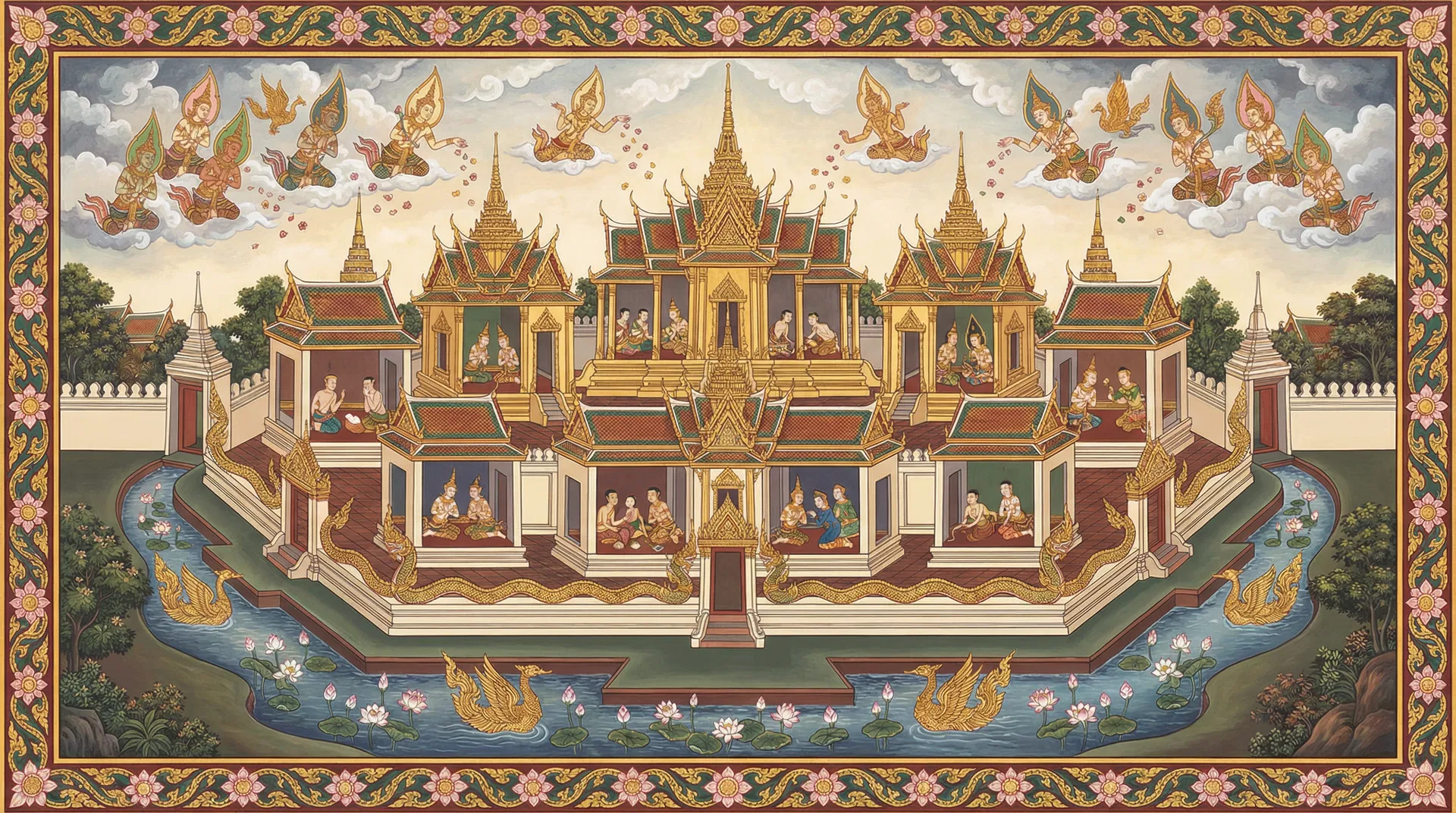
Nimi Jataka
Nimi Jataka
In the ancient city of Mithila, nestled amidst lush gardens and bustling marketplaces, resided King Nimi, a monarch renowned for his virtue and wisdom. His reign was a golden age, characterized by justice, prosperity, and the unwavering devotion of his people. Yet, despite his worldly success, King Nimi harbored a profound longing for spiritual liberation, a yearning that often led him to contemplative retreats and deep introspection.
One day, as he sat in his royal meditation chamber, bathed in the soft glow of oil lamps, a celestial being, the god Sakka, appeared before him. Sakka, the king of the gods, was no ordinary visitor. He had observed King Nimi's virtuous deeds and his earnest desire for higher truths, and he had come to offer a unique gift: a celestial chariot, capable of transporting the king to the heavenly realms, a place of immense beauty and bliss, where he could witness the fruits of his good karma and gain unparalleled spiritual insight.
King Nimi, though humbled by the divine offer, was also cautious. He understood that such a journey, while enticing, was not without its risks. He sought counsel from his wisest advisors, his most learned sages, and his most devoted spiritual mentors. They spoke of the ephemeral nature of heavenly pleasures, the dangers of attachment, and the ultimate goal of Nirvana, a state beyond all realms, heavenly or earthly.
Undeterred, yet with a newfound sense of responsibility, King Nimi accepted Sakka's gift. He ascended into the celestial chariot, a magnificent vehicle crafted from starlight and adorned with divine gems. As the chariot rose into the sky, the King looked down upon his kingdom, his heart filled with a mixture of pride and sorrow. He saw his people, their faces etched with concern for their beloved king's absence, and he felt the weight of his duties, even from afar.
The chariot carried him through realms of unimaginable splendor. He witnessed celestial dancers, heard the enchanting music of the gods, and feasted on ambrosia that sustained the immortals. He saw beings who had attained great merit through their good deeds, enjoying the rewards of their past actions. Yet, with each wondrous sight, King Nimi's mind remained tethered to the teachings of the sages. He saw the impermanence of it all, the constant flux of existence, even in the heavens. He observed that even the gods, with their long lifespans and immense powers, were subject to the cycle of birth and death.
During his celestial sojourn, King Nimi encountered various beings, each with their own stories and lessons. He met with virtuous souls who had achieved great spiritual heights, and he also met with those who had fallen from grace due to their attachment to worldly pleasures. He engaged in profound discussions with wise celestial beings, who expounded on the nature of reality, the laws of karma, and the path to enlightenment.
One particularly illuminating encounter was with a hermit who had renounced all worldly possessions and lived a life of austere meditation. The hermit, with eyes that held the wisdom of ages, explained that true happiness does not lie in external possessions or celestial enjoyments, but in the inner cultivation of the mind. He spoke of the dangers of ego, the illusions of desire, and the peace that comes from detachment.
King Nimi also witnessed the suffering that even celestial beings could experience, often due to the consequences of past negative karma or their attachment to their current blissful state. He saw that the heavenly realms, while beautiful, were still realms of conditioned existence, bound by the laws of cause and effect. This reinforced his understanding that the ultimate refuge lay not in transcending to a higher realm, but in transcending the cycle of existence altogether.
As his time in the celestial realms drew to a close, King Nimi felt a profound shift within him. The allure of heavenly bliss no longer held the same sway. His desire for liberation had deepened, and he now understood with greater clarity the path he needed to follow. He realized that the true celestial journey was not a physical one, but an inner transformation.
With a heart full of gratitude, King Nimi returned to Mithila. He thanked Sakka for the extraordinary experience, acknowledging that it had served as a powerful catalyst for his spiritual growth. He then dedicated himself with renewed vigor to his spiritual practices. He established monasteries, encouraged the study of dharma, and personally lived a life of exemplary virtue, guiding his people not just in worldly matters, but also in the pursuit of ultimate truth.
King Nimi's reign continued, but it was now infused with a deeper wisdom and a more profound understanding of life's true purpose. He had seen the heights of divine existence and the depths of human aspiration, and he had found that the greatest treasure was the peace that came from a mind free from attachment and delusion. His story became a beacon of inspiration, a testament to the fact that even in the midst of power and prosperity, the quest for spiritual freedom is the most noble and rewarding journey of all.
The true celestial journey is not a physical one, but an inner transformation. True happiness lies not in external possessions or celestial enjoyments, but in the inner cultivation of the mind.
— In-Article Ad —
💡Moral of the Story
Inner spiritual cultivation is the path to true happiness and liberation, far beyond the pleasures of even the celestial realms.
Perfection: Wisdom (Panna Paramita)
— Ad Space (728x90) —
More Jataka Tales You May Enjoy
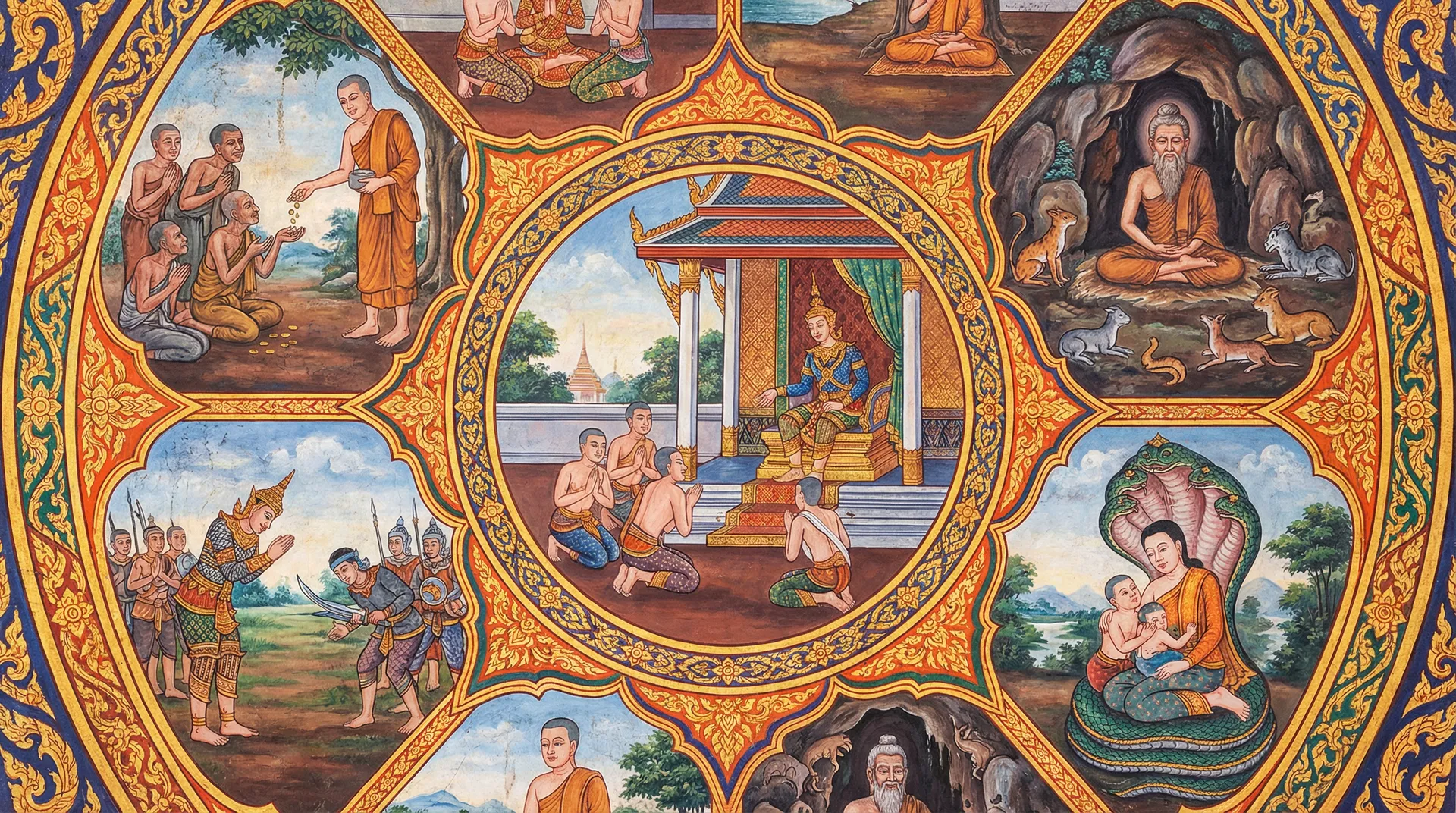 366Pañcakanipāta
KUKKURA JATAKA
KUKKURA JATAKALong ago, in a kingdom nestled beside a sparkling river, there lived a king renowned f...
💡 True loyalty is an intrinsic quality, not merely a result of training. It stems from love, trust, and a genuine bond, and can manifest in unexpected ways, even leading to acts of selflessness.
 326Catukkanipāta
Phra Sang Thong Jataka
Phra Sang Thong Jataka In the ancient kingdom of Suvarnabhumi, nestled between shimmering rivers and...
💡 True worth is found not in outward appearances or hidden identities, but in the courage, wisdom, and compassion one demonstrates through their actions.
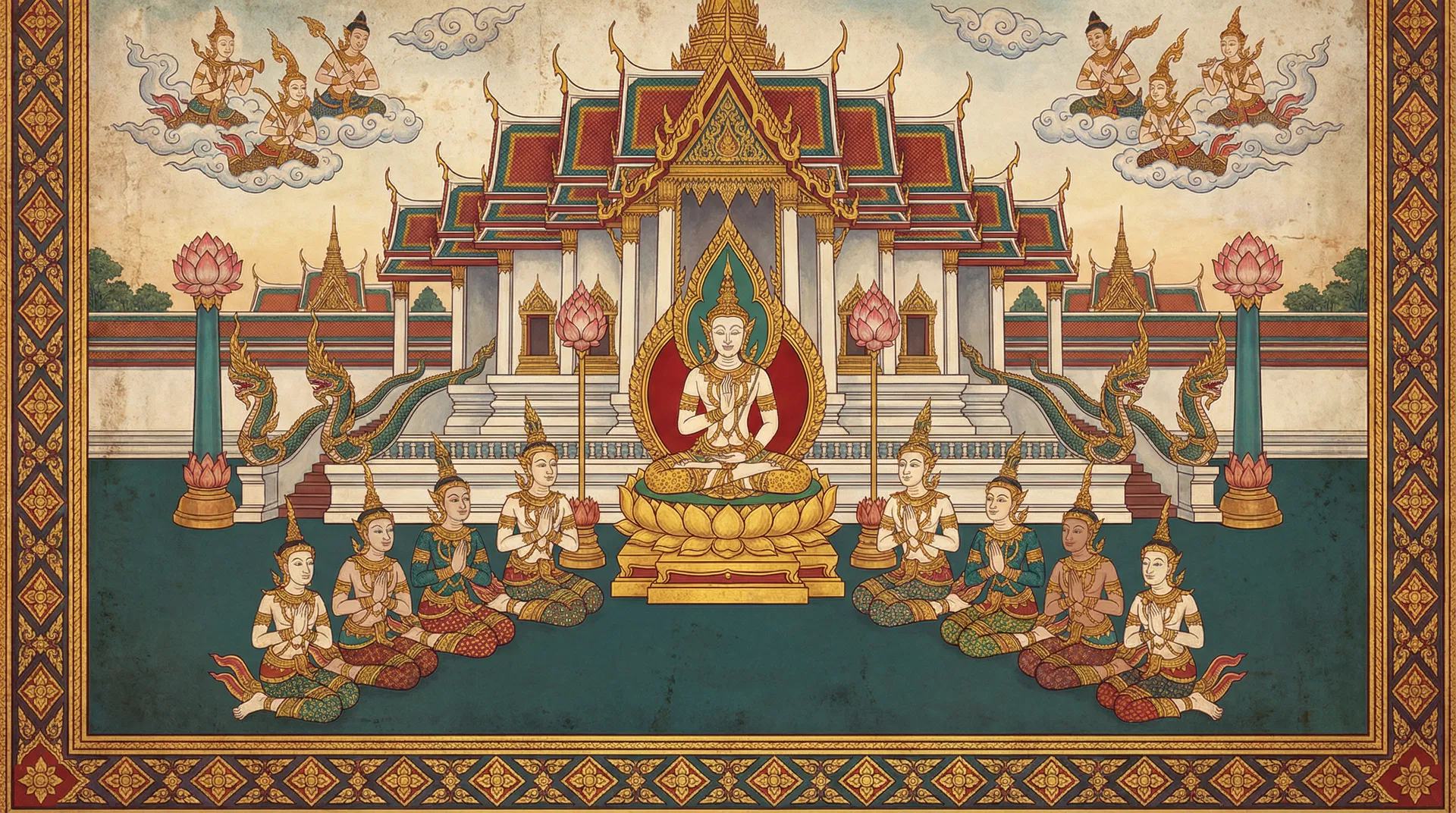 428Navakanipāta
Kaccapavagga Jataka
The Tale of the Wise Turtle In a tranquil lake, surrounded by whispering reeds and ancient willows, ...
💡 Hasty decisions, fueled by fear and pride, often lead to disaster. True wisdom lies in patience, observation, careful consideration, and heeding the advice of experienced friends. Boasting and a desire for admiration can lead to the downfall of even the best-laid plans.
316CatukkanipātaMugapakkha Jataka
Mugapakkha JatakaIn the heart of a lush forest, teeming with life and vibrant hues, there once lived...
💡 True leadership is demonstrated through selfless sacrifice for the well-being of others, even at great personal cost. Compassion and courage can overcome immense hardship.
349CatukkanipātaSuvaṇṇamriga Jātaka
The Golden Deer JātakaIn a kingdom blessed with abundant forests and sparkling rivers, there lived a...
💡 True beauty and wisdom are to be appreciated and understood, not possessed. Righteous rule and compassion are cultivated through learning from virtuous beings, even if they appear in humble forms.
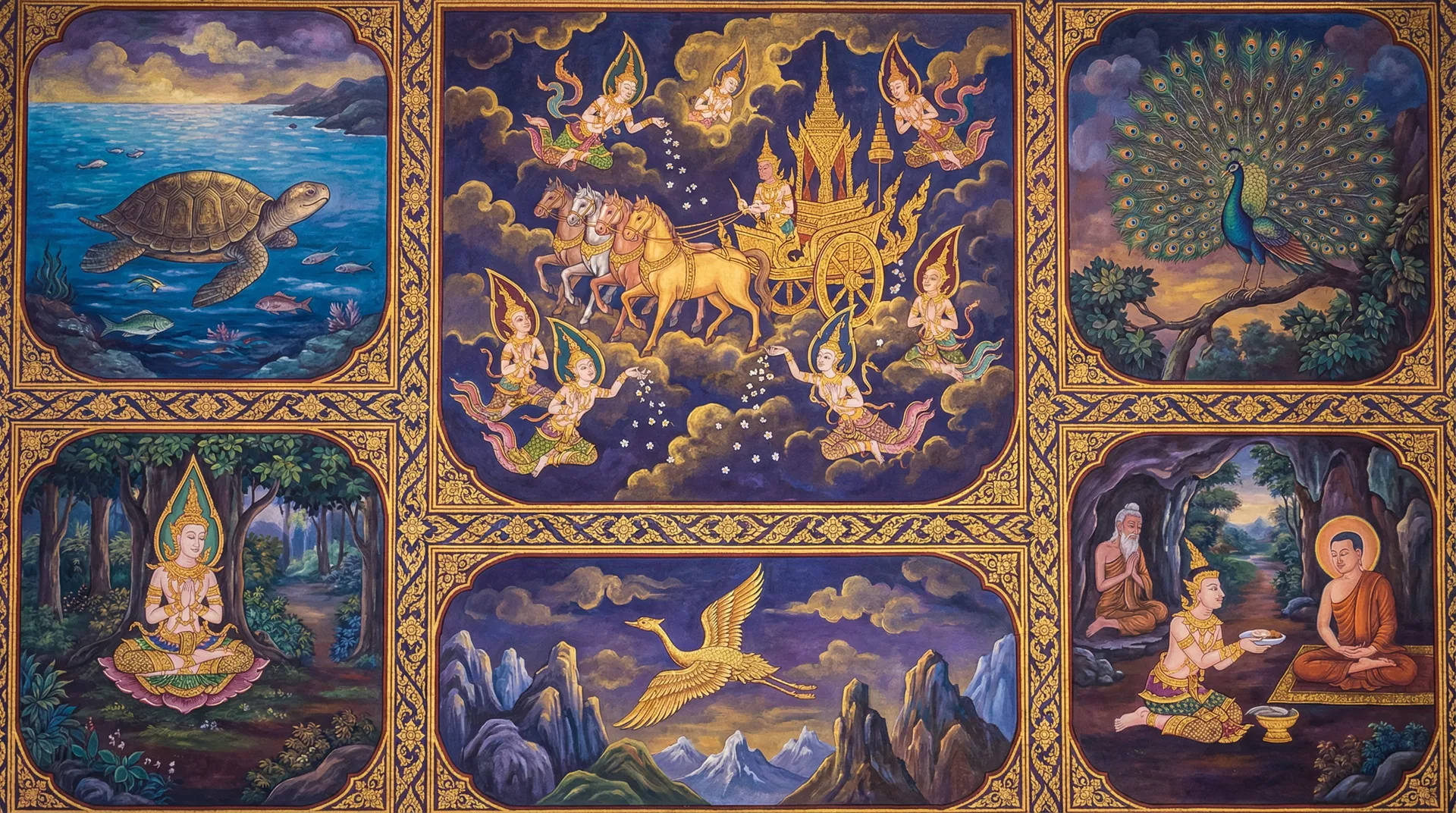 396Sattakanipāta
Kacchapa Jataka
Kacchapa JatakaIn the heart of ancient India, where the Ganges River meandered like a silver serpent...
💡 True renewal and the overcoming of desolation come not just from external resources, but from the cultivation and embodiment of virtues like patience, perseverance, and unwavering commitment.
— Multiplex Ad —